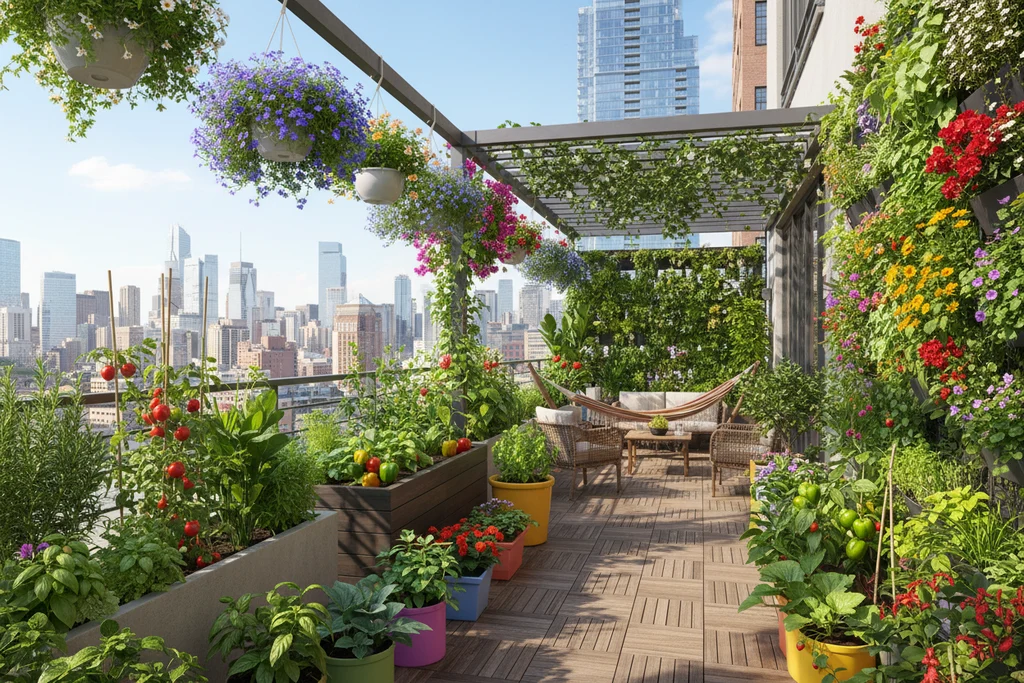
A balcony garden can bring fresh color, useful herbs, vegetables, and natural texture to an apartment without requiring a backyard. Across American cities, balconies vary from narrow upper-level platforms to larger outdoor living areas. Even limited space can support plants when sunlight, wind, weight, water, and building rules are considered carefully.
Successful balcony gardening is less about filling every corner and more about choosing the right plants and containers. A few healthy arrangements can create greater impact than many crowded pots. Renters should also remember that balconies are part of a building structure, so safety and property guidelines must come before decoration.
With thoughtful planning, a balcony can become a comfortable place for gardening and relaxation.
Review Building and Lease Rules
Before installing planters, renters should check property requirements.
Some buildings limit hanging containers, railing attachments, drilling, privacy screens, or heavy objects.
Water runoff may also be regulated because it can affect lower balconies or building surfaces.
Fire exits and access routes must remain open.
Renters should not attach structures permanently without approval.
Understanding the rules before buying materials can prevent unnecessary cost.
Practical small-space garden planning can help residents organize ideas that fit both the balcony and the property requirements.
Measure the Available Space
Balconies often feel larger when empty than after furniture and planters are added.
Renters should measure length, width, railing height, doorway clearance, and walking space.
The door should open fully.
Containers should not block drains or emergency access.
A simple floor plan can help compare layouts.
Vertical growing may preserve more floor space.
Leaving some open area can make the balcony feel comfortable rather than crowded.
Observe Sunlight Throughout the Day
Plant choices should match actual light conditions.
A south- or west-facing balcony may receive intense afternoon sun.
North-facing spaces may remain shaded.
Nearby buildings can block light during part of the day.
Covered balconies may receive bright indirect light without direct sun.
Gardeners should observe conditions during different seasons.
The sun angle changes throughout the year.
Plants that perform well in spring may need protection during stronger summer heat.
Consider Wind Exposure
Upper-level balconies may experience stronger wind than ground-level gardens.
Wind can dry soil, damage leaves, and move lightweight containers.
Tall plants may become unstable.
Heavy or wide-base containers can improve stability, but building weight limits should still be considered.
Plants can be grouped near protected walls when suitable.
Wind screens should follow property rules and remain safely attached.
Delicate plants may require a more sheltered location.
Use Railing Planters Safely
Railing planters can add growing space without reducing the walking area.
They should be designed for the railing type and attached securely.
Loose containers can create serious safety concerns above streets, sidewalks, or neighboring property.
Renters should avoid improvised attachments.
Planters should not extend where they create risk.
Water drainage must also be controlled.
Creative balcony garden inspiration can provide useful ideas, but every design should be adapted to the actual building.
Grow Herbs Near the Door
Herbs are practical choices for small balconies.
Basil, parsley, chives, thyme, mint, and other varieties may grow well in suitable conditions.
Plants used in cooking can remain close to the kitchen entrance.
Separate pots allow different watering needs.
Mint may be easier to control in its own container.
Regular harvesting can support continued growth.
Herb choices should match sunlight and seasonal temperatures.
Try Compact Vegetables
Some vegetables are suited to container growing.
Compact tomatoes, peppers, lettuce, radishes, green onions, and selected beans may fit small spaces.
Container size should support mature root growth.
Vegetables often need consistent water and several hours of useful light.
Large crops may overwhelm narrow balconies.
Gardeners should select varieties described as compact, patio, or container-friendly when appropriate.
Expected harvest should be balanced against available space.
Add Color With Seasonal Flowers
Flowers can make a small balcony feel welcoming.
Sun-loving varieties may work in exposed areas, while shade-tolerant plants can brighten covered spaces.
Using a limited color palette may create a more organized appearance.
Repeating the same flower in several containers can connect the design.
Gardeners should consider bloom period and maintenance needs.
Some flowers need regular removal of faded blooms.
Others provide long-lasting color with less attention.
Use Vertical Plant Stands
Plant stands allow several containers to occupy a smaller floor area.
Shelves should be stable and suitable for outdoor use.
Heavy pots belong on lower levels to reduce tipping risk.
Plants should remain accessible for watering and inspection.
Tall structures should not block windows or neighboring views.
Wind exposure should be considered.
A narrow stand near a wall may provide useful growing space without making the balcony difficult to use.
Select Lightweight Containers Carefully
Lightweight pots are easier to move, especially for renters.
However, very light containers may shift during strong wind.
Material also affects moisture.
Some pots dry faster than others.
Container size should match the plant.
Drainage holes are necessary, but water should be collected or directed responsibly.
Renters should use trays where appropriate and remove standing water.
Create a Watering Routine
Balcony plants may dry quickly because of sun, wind, and limited soil.
Gardeners should check moisture rather than following one fixed schedule.
Small pots may need attention more often than large containers.
Water should reach the root area.
Repeated surface watering may not provide enough moisture.
Overwatering can also damage roots.
Keeping balcony plant care notes can help renters track which containers dry fastest during different weather conditions.
Protect Floors and Neighbors Below
Water and soil should not flow freely from a balcony.
Saucers, trays, and careful watering can reduce runoff.
Standing water should not remain around pots.
Containers may leave marks on finished surfaces.
Pot feet or protective bases can improve airflow.
Renters should clean spilled soil promptly.
Watering should be controlled rather than using high-pressure hoses.
A tidy balcony is easier to maintain and less likely to create property concerns.
Add a Small Seating Area
A garden can also support relaxation.
One compact chair, a folding seat, or a narrow bench may fit beside plants.
Furniture should be weather-resistant and stable.
The layout should preserve a clear path to the door.
Too much furniture can reduce growing space and make maintenance difficult.
A small table may support drinks, gardening tools, or temporary plant work.
The goal is comfort without overcrowding.
Prepare for Seasonal Weather
Balcony plants may experience stronger exposure to heat, wind, rain, and cold.
Containers can become waterlogged during storms.
Strong wind may require temporary relocation of lightweight items.
In cold regions, roots in pots may freeze more quickly than roots in the ground.
Some plants may need winter protection or indoor storage.
Summer heat may require shade adjustments.
Balanced city outdoor living ideas can help renters create flexible spaces that change with the seasons.
A successful balcony garden combines plant care with safety, building rules, and practical use. By measuring the space, studying sunlight, selecting stable containers, controlling water, and choosing compact plants, USA apartment renters can create attractive outdoor areas without a traditional yard. A small collection of healthy herbs, vegetables, flowers, and foliage can turn an ordinary balcony into a useful part of everyday home life.